Fuel Tank Removal In London
Clear redundant commercial fuel storage, from accessible yard tanks to vessels trapped inside London plant rooms. Start with the route out, the fuel left and the space you need back.
Enquire About Fuel Tank Removal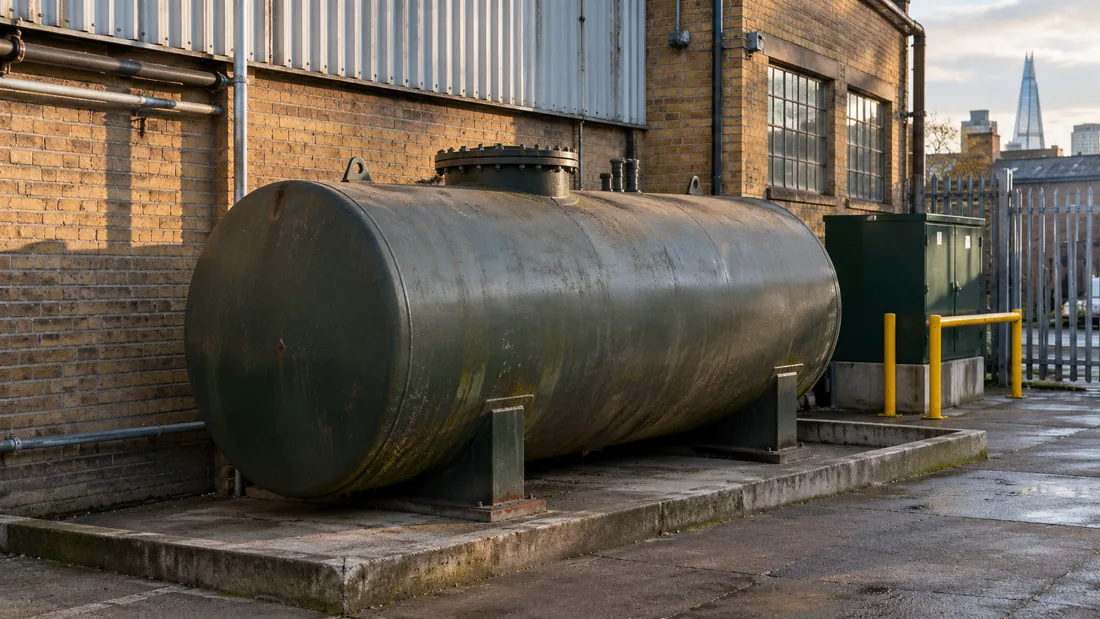
A Removal Plan Starts With The End Use
A redundant tank can hold up a lease handback, heating conversion or building refurbishment. Fuel tank removal brings together the liquid recovery, preparation, dismantling and transport needed to clear that equipment. The scope should identify the tank and every connected item that is being taken away, rather than assume that a quotation for the vessel includes the whole fuel installation.
For London commercial premises, tell us whether the objective is an empty plant room, a cleared yard or a site ready for excavation. A bund, concrete base, buried line or fill cabinet may need its own work package. Making these boundaries explicit avoids leaving an unwanted piece of infrastructure for the next contractor.
Lift Whole Or Dismantle In Place?
An above-ground vessel with a suitable lifting position may be removable as one unit. The assessment considers its empty weight, dimensions, condition and lifting arrangement, together with the ground available for the lifting equipment. A large yard does not automatically offer a safe crane position if it contains underground services or covers.
A tank inside an older building may be larger than the door through which it now needs to leave. Controlled dismantling can be considered where a whole-tank route is impractical. The method depends on residues, the atmosphere, construction and neighbouring activities. Cold cutting is a specialist option, not permission to cut an apparently empty tank without preparation.
For buried tanks, excavation changes the decision. Drawings, service searches, nearby foundations and evidence of leakage all matter. If excavation would create unacceptable structural difficulties, discuss a documented decommissioning assessment rather than simply leaving the vessel untouched.
Keep Fuel Recovery Separate From Scrap Removal
The gauge reading is only a starting point. Usable fuel, water beneath the fuel and settled deposits need different handling. Give the estimated volume and fuel type even if you are uncertain, and say whether another suitable tank on the premises could receive recoverable stock.
Reuse is subject to condition and compatibility. Fuel that cannot be used, plus recovered residues, needs an agreed waste route and classification. A scrap collection price says little about the cost of managing these liquids, so ask for fuel handling to be identified in the quotation.
If the tank still supplies heating or standby equipment, agree who authorises the shutdown and what will replace that supply. Removal should follow the approved changeover, with the connected system made safe by the appropriate competent trades.
Sequence The Work Around An Occupied Site
The work plan should cover site induction, isolation responsibilities, recovery of contents, cleaning, atmospheric assessment and the chosen removal method. Separate public routes and delivery movements from the work area. On multi-tenant premises, confirm who can approve access through shared spaces and which tenants need notice.
Lifting work needs competent planning, supervision and safe execution under the Lifting Operations and Lifting Equipment Regulations 1998. Fire and explosion risks from dangerous substances also need assessment under DSEAR. These controls are job-specific, not a standard certificate attached to every quotation.
Agree the condition in which the area will be handed back. Removing a tank does not automatically include floor repairs, bund demolition, ground investigation or reinstatement of the yard surface.
Photos And Measurements For A Useful Assessment
Send photographs of the complete tank, its supports, label or nameplate, connections and surrounding space. Photograph the full route to the vehicle position, including doors, turns, stairs, gates and height restrictions. Take photographs from safe existing access only, without opening the tank or disturbing pipework.
Include the postcode, approximate tank dimensions and capacity, previous contents, fuel estimate and any inspection report. Tell us about basement access, loading restrictions, permit systems and the date by which the space must be clear. If the tank is buried, share any available plan and known changes to the ground above it.
What Changes The Removal Cost?
Preparation and access often drive the price more than the scrap value. Fuel quantity, sludge, restricted working hours, sectional dismantling, lifting reach, transport and excavation all affect the resources needed. A tank that can leave whole during a booked yard closure is a different project from one dismantled through an occupied basement.
Ask whether the proposal includes a survey, fuel recovery, cleaning, cutting, lifting, transport, waste charges and final records. Identify exclusions for contaminated ground and concealed services. Where a condition cannot be established from photographs, a survey or a stated allowance is more useful than a fixed-looking figure built on guesses.
Close The Job With The Right Records
Request a completion record identifying the removed equipment and the work performed. Waste documents depend on classification and the route taken, with transfer notes or hazardous waste consignment notes as appropriate. Check the receiving and carrier arrangements, rather than assume every component leaves through the same route.
A gas test relates to the conditions when the test was taken. Any gas-free record needed for the selected method should be specified, particularly where hot work is involved, rather than treated as permanent proof of safety. Retain the removal record with the asset register and property file, and update drawings to show redundant connections.
Fuel Tank Removal Questions
Can A Tank Be Removed From A Basement?
Basement tank removal can be possible when lifting the whole vessel is impractical. Door sizes, stairs, ventilation, neighbouring rooms and the route for recovered liquid all need assessment. Send route photographs and any drawings before booking work, and leave connections and access panels undisturbed until the method has been agreed.
Does An Empty Tank Still Need Cleaning?
An empty tank can retain liquid, sludge and flammable residue even when its gauge reads zero. The preparation must suit the removal method and previous contents. A competent contractor should assess cleaning and atmospheric controls before any cutting or lifting, with testing repeated where the work or conditions require it.
Further Guidance
General guidance supports planning. The site assessment determines the method and applicable requirements.
Bring The Site Details Together
Send the postcode, equipment details and the outcome you need. We will use your enquiry to help identify a suitable service provider, with your agreement.
Start Your Enquiry